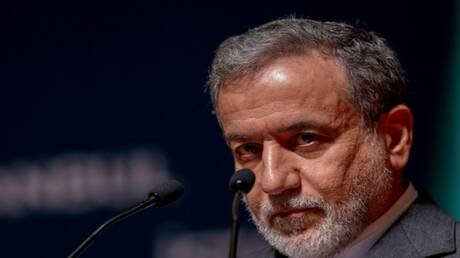

A crisis that goes beyond security.. What do Araqchi’s statements reveal about Iran? According to Iranian affairs expert Nabil al-Haidari, the statements of Iranian Foreign Minister Abbas Araqchi regarding the continuation of security gaps are no longer merely an acknowledgment of a security flaw, but rather have turned into an indicator that reveals the depth of the penetration within Iranian state institutions, and the extent of the crisis facing the ruling system at the security and political levels.
He also points out the frequent announcements of the arrest and execution of people accused by the authorities of working for Israel, considering that the numbers announced by Tehran itself reflect the scale of the security crisis it faces, specifically pointing out that Iran executed 27,000.
Details
Data indicate that Al-Haidari describes Araghchi's statements as a "blatant admission" of the existence of a security breach inside Iran, based on what happened during the targeting of two simultaneous meetings.
He points out that Araqchi himself confirms the continuation of this security vulnerability until now, considering that this also explains the failure of Mojtaba Khamenei to appear, in light of what he describes as the fear of being exposed to the same fate, which he believes was implicitly mentioned in the statements of the Foreign Minister.
Al-Haidari believes, during his talk to the “Ninth” program on Sky News Arabia, that what Araqchi revealed intersects with accumulated indicators that reflect the escalation of divisions within decision-making centers, and the decline in the leadership’s ability to control security and military institutions, at a time when disagreements are increasing between the wings of power and are reflected in internal and external files.
Al-Haidari believes that the internal scene in Iran has witnessed a clear change after the absence of Ali Khamenei, explaining that the former guide used to resolve disputes within the institutions of government simply by his speech or decision, while Mojtaba Khamenei has not appeared until now, neither in voice nor image, which, according to him, coincided with the disagreements within the regime reaching a severe degree.
He cites what happened during the funeral ceremony of Ali Khamenei, where Ahmad Vahidi, head of the Revolutionary Guard, took the lead, and with him the hard-line movement chanted slogans against Muhammad Baqir Qalibaf, Masoud Pezeshkian, and Abbas Araqchi, accusing them of collaborating and treason and demanding their execution, while Araqchi, according to his account, was stoned and fled from the funeral ceremony.
Data indicate that a series of statements confirm the crisis of the security system.
Al-Haidari confirms that Araqchi is not the first official to speak about this file, noting that the advisor to the Supreme Leader, Mohsen Rezaei, had previously spoken about security breaches that led to the killing of the Leader and a number of leaders. He also linked the assassination of prominent figures, including Ismail Haniyeh, to the existence of internal security gaps.
Al-Haidari points out that Mojtaba Khamenei’s absence from public appearances has raised questions inside Iran, pointing out that what is being circulated by followers on Iranian social media platforms, including himself, is focused on his not appearing in any picture or video recording, “even just a picture without sound.”
Statements
“Weak on the inside, but radiating out to others.”
“If people go out into the street, we kill them without a court.”
Context
Although this movement was accusing these people during Ali Khamenei's funeral of collaborators and treason and calling for their execution, Araqchi was also subjected to stones and was forced to leave the funeral ceremony.
He adds that former Iranian President Mahmoud Ahmadinejad also spoke about a breakthrough that reached the security official responsible for the nuclear file, considering that he was a Mossad agent, which linked him to the smuggling of the nuclear file to Israel.
The data indicate that this is an indication of the extent of the loss of confidence within the Iranian security establishment.