
Artificial intelligence in Arabic.. Are we close to models that understand the dialects of the region? In the world of artificial intelligence, the Arabic language was considered merely a language into which answers were translated or supported in user interfaces, but now it has become the focus of an accelerating technical race led by international companies and Arab research institutions to develop linguistic models capable of understanding the specificity of Arabic and its multiple dialects.
This prompted them to develop the AraDiCE standard to measure the ability of models to understand Arabic dialects and cultural context, explaining that the lack of data for low-resource dialects still represents one of the biggest challenges to developing true Arabic artificial intelligence.
Details
The study included Arabic models such as Jess and Nile, in addition to international and multilingual models, and concluded that the performance of the models has clearly improved compared to previous years, but the great diversity among dialects still represents a real challenge, especially in accurate translation, identifying the correct dialect, and understanding the local cultural context.
In a research paper presented within the 13th International Workshop on Natural Language Processing for Similar Languages, Linguistic Diversities, and Dialects in Morocco, researchers were able to adapt open source models to deal with 5 Arabic dialects: Egyptian, Moroccan, Palestinian, Saudi, and Syrian.
Developing linguistic models for Arabic is more complex compared to other languages, as Arabic is not a single language in practice, but rather a system that includes classical Arabic and dozens of regional and local dialects, which may differ in vocabulary, pronunciation, and even linguistic structure.
Researchers point out in a scientific paper published within the proceedings of the sixty-third annual conference of the Association for Computational Linguistics in 2025 that Arabic dialects are still limitedly represented in most major linguistic models.
But real success will not be measured by the number of words the model can produce in the local dialect, but rather by its ability to understand the social and cultural context behind those words, a challenge that still represents the new frontier of artificial intelligence in the Arabic language.
During the last two years, the focus has moved from supporting Standard Arabic to addressing a more complex challenge, which is understanding the local dialects used by hundreds of millions daily, starting with the Saudi and Gulf dialects, passing through Egyptian and Levantine, all the way to Moroccan, whose vocabulary and structures differ greatly from Standard Arabic.
In 2025, the UAE also announced the Falcon Arabic model, developed by the Advanced Technology Research Council, stressing that it was built based on original Arabic data that reflects the full linguistic diversity of Arabic, and not through translating data into other languages, in a step aimed at raising the quality of understanding local dialects and contexts.
Despite this progress, recent studies indicate that there is still a long way to go. In a scientific study published this year within the AbjadNLP workshop, researchers tested a number of linguistic models to translate and understand 16 Arabic dialects using the famous MADAR database.
Statements
“Understanding Arabic Linguistic Identity”
Context
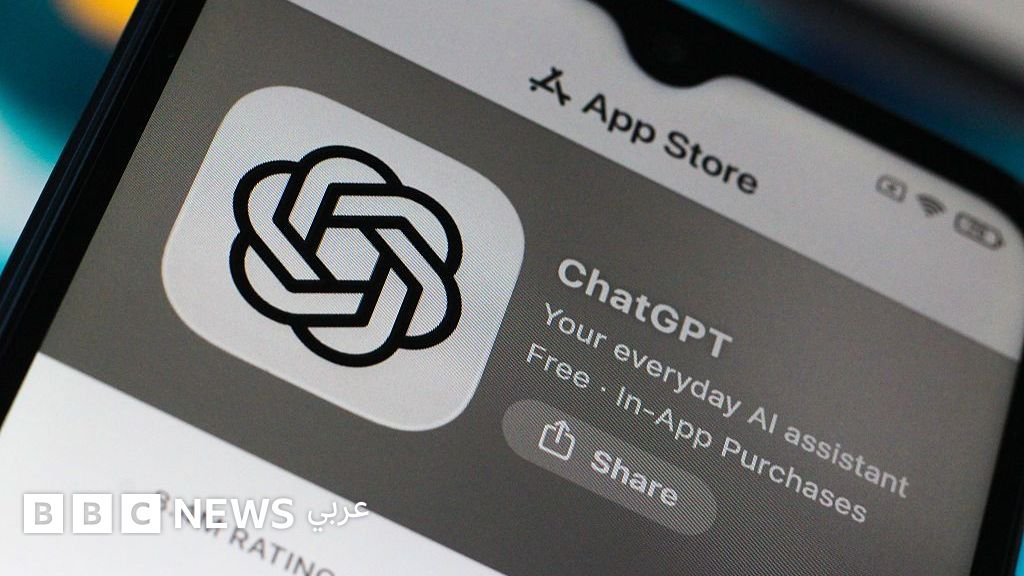
However, recent years have witnessed the emergence of specialized Arabic models, most notably AllaM from Saudi Arabia and Jais from the Emirates, in addition to a noticeable improvement in international models such as GPT Chat, Gemini and Cloud in dealing with Arabic.
Arabic dialects lack large, open databases compared to the English language, and a large portion of Arabic content on the Internet is written in standard Arabic or in non-standard dialects, which makes the task of collecting accurate and balanced data difficult.
With the increase in Gulf investments, the emergence of new standards for evaluating Arabic models, and the expansion of dialect databases, the indicators appear promising towards building a new generation of Arabic linguistic models.
Until recently, most commercial models performed well in Standard Arabic, but fell behind when dealing with long colloquial conversation
Artificial intelligence experts agree that the quality of a model does not depend only on its size or number of parameters, but rather on the quality of the data on which it is trained.
For this reason, many Arab institutions are turning to creating local databases that include real conversations and texts in different dialects, with the aim of training more accurate models.
list 1 of 2The artificial intelligence czars in the Trump administration do not last.
Net: A new Chinese artificial intelligence that confuses competitors - Trend News A new Chinese artificial intelligence that confuses competitors - Trend News.
What to watch next
A new Chinese weapon in the artificial intelligence race
A new Chinese weapon in the global artificial intelligence race.